
Definitions & Glossary
The outdoor advertising industry uses specialized terminology that can be confusing to those unfamiliar with the field. Below are definitions of common billboard types and industry terms.
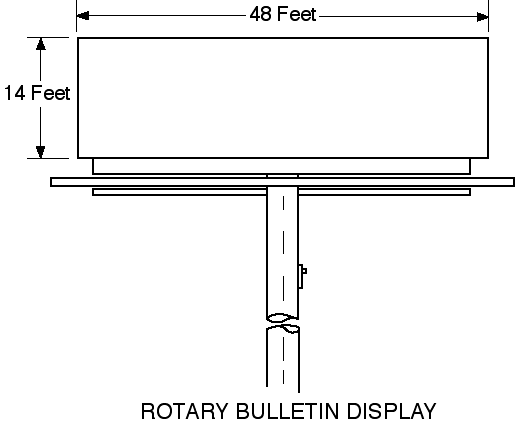
Bulletin (Rotary Bulletin)
- Common sizes include: 20' × 60', 14' × 48' (Rotary) and 10'6" × 36'
- Usually located on heavily traveled highways
- Usually illuminated
- Rotary advertisements are computer printed on flexible vinyl and stretched over the display with elastic cords
- Extensions can be added to enhance visibility
- Rotary bulletins are moved every 60 days
- Permanents involve contracts from 6 months to 1 year
30-Sheet Poster
- Common size: 12'3" × 24'6"
- Usually located on primary and secondary roads in commercial/industrial areas
- Usually illuminated
- Lithographed or silk-screened
- Short-term contracts of 30 days or more
- 30 sheets of 28" × 42" paper historically needed to cover the face
8-Sheet Poster (Junior Panel)
- Common size: 5' × 11'
- Usually located in urban and suburban neighborhoods
- Not always illuminated
- Targeted at pedestrian and automobile traffic
- Originally required 8 sheets of paper to cover the face
Spectacular
- Common sizes: Large Custom Sizes
- Usually located in major metropolitan areas (e.g., NYC Times Square)
- Usually include special displays or extensions
- Targeted at heavy pedestrian and automobile traffic
- Usually involve long-term contracts of a year or more
- Characterized by high production costs
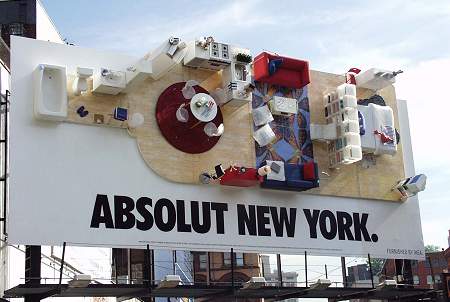
Wallscape
- Large-format advertising painted or mounted on the side of a building
- Sizes vary greatly depending on the building surface
- Often found in dense urban markets
- Can be illuminated or non-illuminated
- Typically involve long-term contracts
Digital Billboard (LED)
- Electronic signs that display static images in rotation (typically 6–8 second spots)
- Allow multiple advertisers to share one structure
- Command premium advertising rates over static displays
- Require approval from state DOT and local governments
- Regulated by the Highway Beautification Act and state/local ordinances
Bus Shelter
- Street furniture advertising panels located at bus stops
- Usually 4' × 6' backlit display panels
- Targeted at pedestrian and transit riders
- Typically owned by municipalities or transit agencies and licensed to operators
Ground Lease (Site Lease)
- A lease agreement between a sign company (tenant) and a property owner (landlord) allowing placement of a billboard on the property
- Typically runs 5–25 years with renewal options
- Often includes percentage rent tied to advertising revenue
- May include relocation rights and removal obligations
Eminent Domain (Condemnation)
- The power of a government entity to take private property for public use with just compensation
- Billboard owners are entitled to compensation for the market value of their sign and any leasehold interests
- Landowners may also have claims for loss of rent or diminution in lease value
- SignValue provides independent appraisals for both condemning agencies and property owners
RCNLD (Replacement Cost New Less Depreciation)
- An appraisal methodology estimating the cost to replace a sign structure at today's prices, minus physical depreciation
- Includes the cost of the structure, electrical components, and installation
- Often used as a check against income and sales approaches
- Does not include the value of the permit, lease, or advertising revenues
Highway Beautification Act (HBA)
- Federal law (1965) that regulates billboard construction and maintenance along interstate and primary highways
- Requires states to control billboard sizes, lighting, and spacing
- Non-conforming signs ('grandfathered' signs) may not be expanded or rebuilt after certain damage thresholds
- Violation can result in loss of federal highway funds